
Jerry Bridges, Discipleship Journal, January/February 1984
Prayer is warfare with a defeated but still powerful enemy. When we allow our prayer lives to remain only on the level of immediate or "felt" needs, we risk the great danger of losing the struggle that God is ultimately interested in.
There’s a chapter in the history of the nation of Israel that I believe graphically illustrates the way we tend to operate as Christians.
Second Kings 3 records the account of Joram, the king of Israel, going into battle against the king of Moab. Joram did not seek God’s help or guidance for the fray; he simply made the decision and then enlisted the alliance of his former countryman, Jehoshaphat (king of Judah). Jehoshaphat didn’t pray either. After gathering up the king of Edom, they all went charging into battle.
In verse 9 we find out that they got into a supply problem: they ran out of water in the middle of the desert. Suddenly they wanted God’s help, and only then did they begin to pray (their method of praying was to seek the prophet). Their felt need was the focus of their prayer.
Water for their men and animals was a very important detail for those kings. But they were not out in the desert to drink water: they were there to fight a battle. Notice how God answered when he spoke to the prophet Elisha: “You will see neither wind nor rain, yet this valley will be filled with water, and you, your cattle and your other animals will drink. This is an easy thing in the eyes of the Lord; he will also hand Moab over to you” (verses 17–18). God had not forgotten the objective: to win the battle over the Moabites. The kings, however, had lost sight of why they were out there, because they were preoccupied with their immediate need.
The True Battleground
As Christians, our prayer lives tend to dwell in the realm of water shortages. We seldom operate in the realm of true spiritual warfare. Go to an average prayer meeting, and I guarantee that 75 percent of the prayer requests will be for felt needs: for example, Jim’s neck. Now Jim’s neck needs to be healed, and I hope we are praying about it. But we never seem to get into the battle. As I’ve told my Sunday school class, “The only way that you can get prayed for at our church is to be in the hospital or out of a job.”
One year at Thanksgiving time I flew out to southern California to speak at a mission conference. My goal was to stimulate a vision among students and young military personnel for recruiting laborers for the harvest field. When I arrived at the Los Angeles airport, however, no one was there to meet me.
After wandering around the gate area and the baggage claim for forty-five minutes, I called the conference grounds. No answer. I thought, Well, I’ll get my secretary on this—she knows how to take care of these things. But when I called long distance back to Colorado Springs, no one answered the phone there either! Then I remembered that it was the Friday after Thanksgiving, and the office was closed. There I was, stuck.
It was then that I resorted to prayer: “Lord, if there is anyone in this airport looking for me,” I prayed, “help him to find me.” Not having much faith that my prayer was going to be answered, I headed out a nearby door to catch a bus to Pasadena. On my way out, I ran into a familiar-looking man on his way in. He was looking for me.
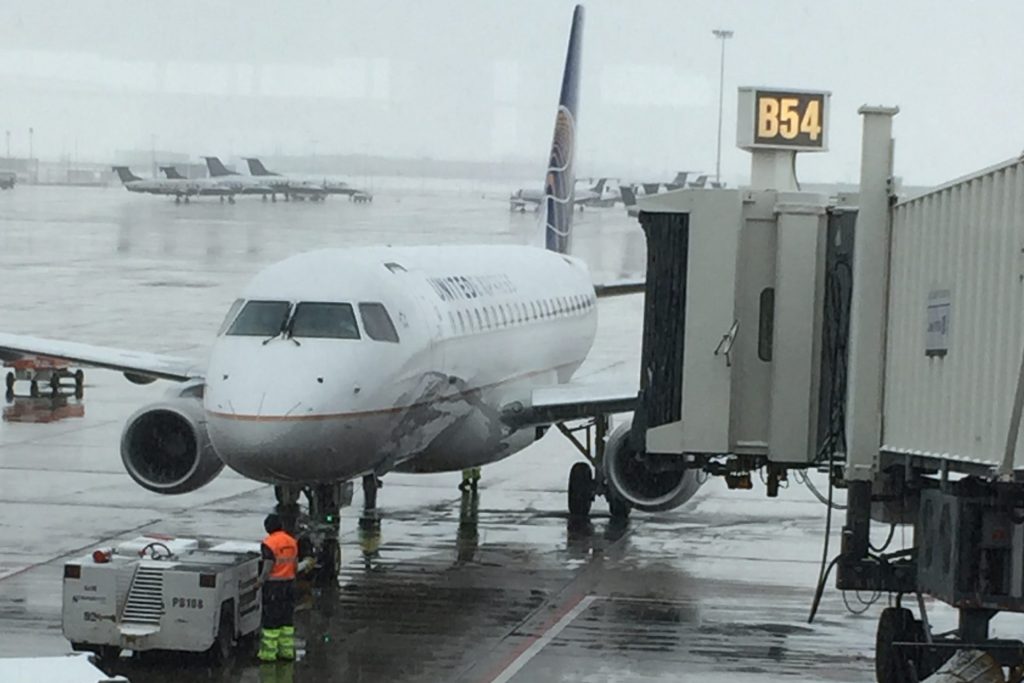
That was one of the quickest answers to prayer that I have ever experienced. Later on, however, I asked myself this question: “Did I pray as fervently for the real mission for which I was sent to southern California as I did that someone might find me at the airport?” In that airport, I was like Joram and Jehoshaphat, stranded in the desert without water. But the real reason I was there was not to get picked up at the airport, but to have a part in recruiting laborers for the harvest field. Jesus told us to pray that the Lord of the harvest will send forth laborers. That was the real battle.
There are three military terms that I feel illustrate various types of prayer: strategic, tactical, and logistical.
- Strategic refers to the ultimate objective—to defeat the enemy—and the overall plan, or strategy, to bring him into submission.
- Tactical means the specific battles necessary to achieve the ultimate objective.
- Logistical is simply supplying the physical needs of the army fighting the battle.
I believe that 75 to 80 percent of our prayer is for logistical items. For water in the desert. For someone to find us at the airport. For that sick person in the hospital. For the one who lost his job. All of these things are important, and we should be praying for them. But those kinds of things are almost all we pray about.
I would guess that 15 to 20 percent of our prayer effort is tactical, related to specific engagements with the enemy—the spiritual results of the conference I spoke at, for example. But that conference was only a specific operation; the overall objective was raising up laborers.
Very little of our prayer effort is strategic, or focused on our ultimate objective—the battle that God is really interested in. We need to remember that when we pray, we are entering into spiritual warfare. We are engaging a defeated but still powerful enemy: Satan, our unseen foe.
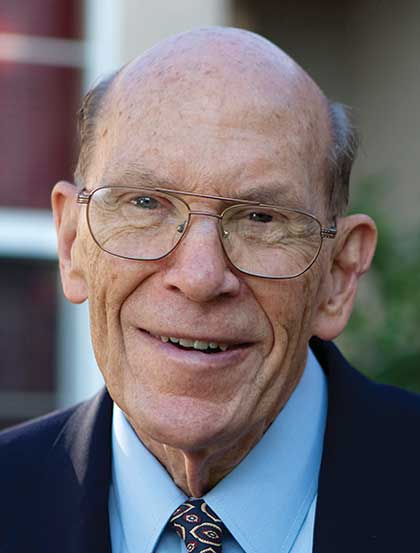
Jerry Bridges was a well-known Christian writer and conference speaker. His best-known book, The Pursuit of Holiness, has sold well over a million copies. A prolific author, he has sold over 3.5 million copies of his various books, with several titles translated and published in a variety of foreign languages. He joined the staff of The Navigators in 1955, serving 60 years as a staff member in various capacities before transitioning to associate staff and serving within the collegiate ministry.